
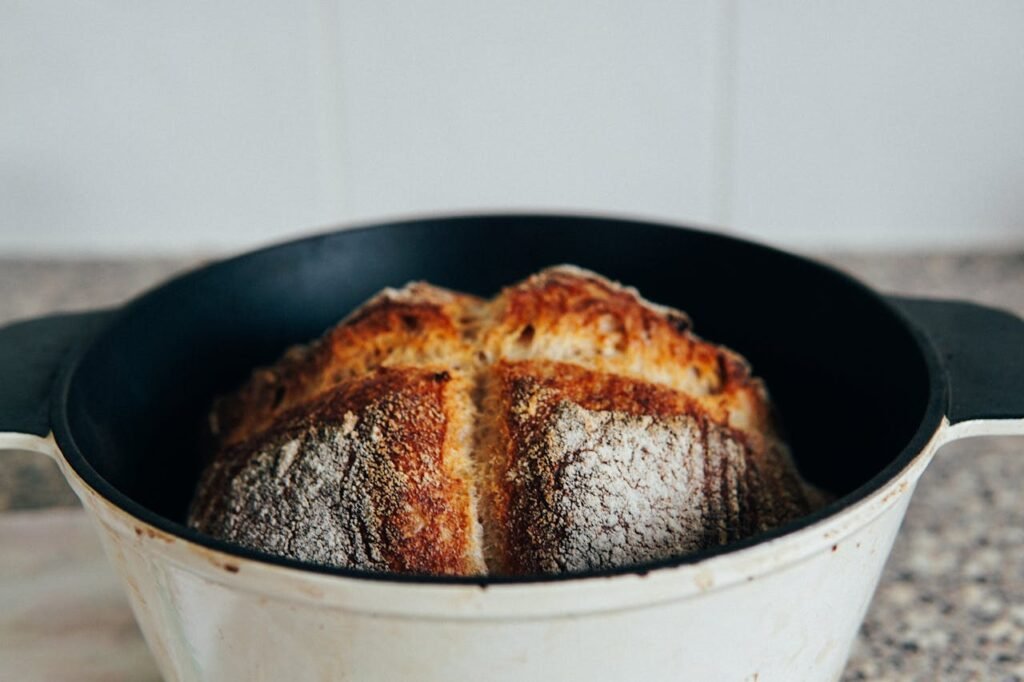
Did you know that you could bake in a cast iron cookware? Most people think cast iron is for steaks and crispy fried eggs. Surprisingly, cast iron isn’t just for stove tops but a secret tool for bakers too. Baking in cast iron cookware ensures an even, consistent heat, golden crust and an unbeatable flavour for breads.
This article explores why baking in cast iron is better than stainless steel, aluminum or non-stick cookware and what you can bake with this age-old cookware to bring your recipes to life.
Cast iron bakeware for even heat distribution and perfect results
Cast iron is known to distribute heat evenly across the entire surface. This makes it a perfect bakeware for bread, cakes and pies. Unlike metal bakeware that heats unevenly, causes burnt edges or raw centres, a heavy cast iron Dutch oven or a skillet provides even heat that bakes your cookies, cakes or cornbread uniformly without the frustration of undercooked middles. A common problem with electric ovens where the heat goes up and down throughout the cycle, which creates a dip in heat periodically. Cast iron helps retain the heat and provides stable temperature crucial for crispy crust and moist interiors.
Tip: Ensure that your cast iron Dutch oven is well preheated before baking for best results.
Cast iron pans add a unique flavour profile to baked goods
Seasoned cast iron develops a natural patina over time. The patina gives the non-stick property to the pan but also adds a rich, slightly earthy flavour to your baked food. Whether it is a skillet brownie or a deep-dish pizza, your cast iron develops a richer earthy taste than an aluminium pan can offer. Some bakers even say their biscuits have a buttery note they never achieved before switching to cast iron.
Bake and serve in the same pan
Cast iron pans are a beautiful serving dish too. Beautiful enough to serve from, you can place your golden Dutch baby pancake on a brunch table or slice gooey chocolate chip cookie straight from the skillet. These pans with the rustic charm make an oven-to-table presentation which is Instagram-worthy. No hassle of transferring food and a beautiful presentation cookware at the same time. Fewer dishes to clean up is something every home baker can appreciate.
Cast iron bakeware, incredibly versatile
The food you can cook with a cast iron bakeware is not limited to just one or two items.
Cornbread: A cast iron pan creates golden crust that’s hard to beat.
Cakes: Think upside-down or gooey skillet cakes with cast iron pans.
Pizza: Achieve crispy bottom and pillowy soft centres without a pizza stone with a cast iron skillet.
Sourdough bread: The Dutch oven simulates a steam oven for perfect crust and a soft inside.
Cinnamon rolls: Bake them evenly with a cast iron pan to get a soft middle and crispy inside.
Naturally non-toxic and eco-friendly cast iron cookware
Modern non-stick cookware made from Teflon releases harmful chemicals at high heat. Cast iron on the other side is made from pure iron and naturally seasoned with oil. No synthetic coating which means no health risks. Baking in cast iron is a great choice for those who want to avoid toxic non-stick pans. It’s also a zero-waste option. With proper care, cast iron lasts generations making it sustainable and eco-friendly to your kitchen.
Bake anywhere – Oven, grill, campfire or woodstove
Imagine a portable oven. Cast iron pots are excellent for providing uniform heat for the food you cook, no matter the medium. You can bake biscuits while camping or try cinnamon rolls on the barbecue. Cast iron can handle extreme temperatures and work on open flames, campfires, grills and wood stoves, making it a versatile cooking medium for off-grid baking, outdoor brunches or baking where traditional oven is not available.
Develop a coveted crunch – perfect for crust lovers
Cast iron is a crust lover’s dream. Since they hold heat so well, it promotes a Maillard browning, the scientific process that gives crusts the golden hue and complex flavour. Whether you are making pie, quiche, or simply plain bread, you will get a crispier, golden crust compared to glass or silicone bakeware.
Affordable and lasts forever – Cast iron is literally indestructible
Cast iron is one of the most cost-effective baking tools you can own. You will find skillets, Dutch ovens and bakeware for a fraction of the cost of a high-end ceramic or copper pan. While they cost a lot less, they are also timeless in terms of beauty. Even after 4 generations, the cast iron pots and pans have that charm on people. And yes, they do last 4, 5 or 10 generations if treated well. Unlike aluminium pans that warp or non-stick coatings that scratch, a well-maintained cast iron pan can last generations and it improves with age!
Common questions people ask
Can you bake cakes on cast iron?
Yes. Cast iron skillets are perfect for upside-down cakes, brownies and even sponge cakes. Just remember to grease the pan thoroughly and preheat them.
Do I need to preheat the pan before baking?
For recipes where crust formation matters, like pizzas, breads and cornbread, preheating will bring out the golden crust and a distinct taste to the food.
Will acidic ingredients like tomatoes ruin cast iron?
A well-seasoned cast iron pot can take an occasional acidic ingredient during baking. The patina will hold well when you create food like lasagna. Nevertheless, give it a nice seasoning after you finish cooking.
Can I use parchment paper in cast iron?
Yes. You can use parchment paper on cast iron for the easy release and keeping the sticky food from clinging. This is a good option while baking cakes.