
Not many people understand management as well as chefs. While most commoners think that cooking is all the same wherever it may be, chefs understand a lot more about cooking and management than most of us could ever imagine. Home cooking is slow, less stressful, more organized, and prepared to satisfy not just your hunger but your soul. In a restaurant, it’s chaos, fast, more focused on the taste and getting the presentation right.
Most chefs will not use what they use in a restaurant at home. Restaurants need faster response, larger tools and accessories, and precision. Everything is bigger in a restaurant. The stove can get extremely hot in seconds. The oven is different, and almost everything else looks superior. At home, chefs prefer more luxurious tools and accessories, tools that are more inclined to improve the taste of food and remain hygienic.
Some of the tools chefs use at home are below.
1. Chakla Belan: Rotis and naans are common in most Indian restaurants. There usually is a dedicated corner for flatbreads in most Indian restaurants, but you will never find a single chakla belan in a restaurant. Yes, there will be a rolling pin, and sometimes it may resemble a belan, but never a chakla. Restaurants use a countertop to roll out chapatis, rotis, and puris. Most restaurants use a steel countertop which is easier to clean. Others use a mechanized dough roller and other industrial equipment to get the rotis done precisely to the right shape, thickness, size, and consistency. At home, things are different. Countertops may be convenient, but no one likes to mess up the entire counter to prepare 10 rotis. A chakla belan is the de facto norm. While there are variations and personal preferences to chakla and belan, most chefs prefer a wooden chakla and belan made from hardwood. The second choice is stone, followed by steel.
2. Mortar and Pestle: One of the easiest and accessible tools to grind small batches of spices and prepare pastes at home is a mortar and pestle. It’s easier than cleaning up your mixer jar after grinding a small piece of ginger, garlic, or chilies. But in a restaurant, nothing is made in small batches, and also, cooks do not have the luxury of time to grind food manually. Things have to be quick, and they need to be done fast. A commercial kitchen will use electric spice grinders due to speed. While mortar and pestle offer a distinctive taste, it needs to be compromised in a commercial kitchen for speed.
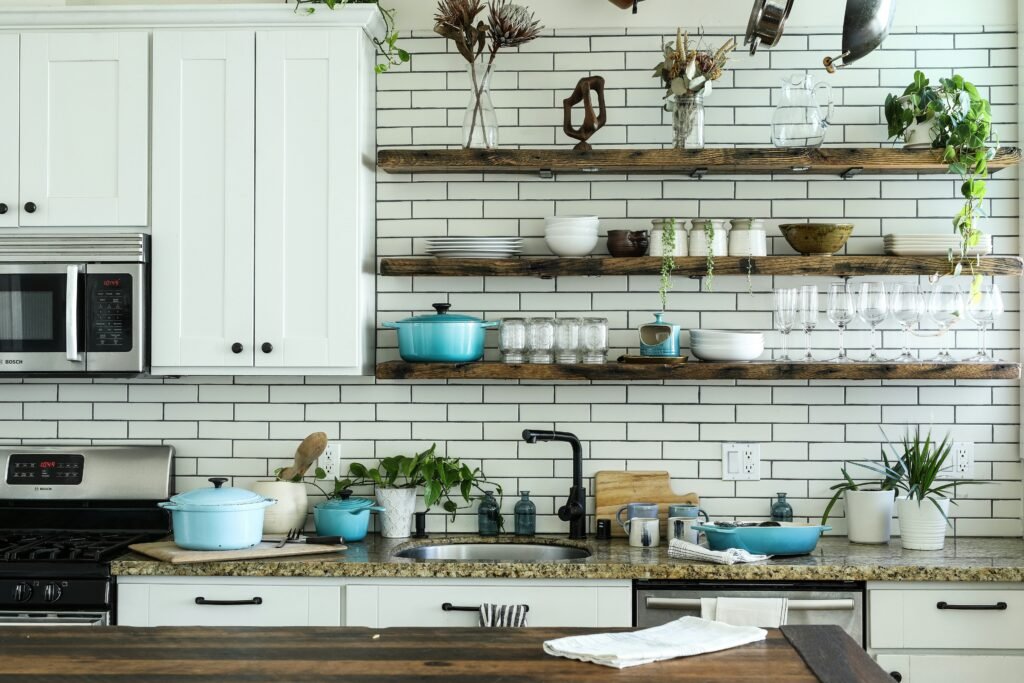
3. Cast Iron Cookware: Cast iron cookware is known for slow cooking and its ability to retain heat and create even heat. Most cast iron cookware is heavy, cumbersome to move, and not practical in a fast environment like a restaurant. At home, chefs use cast iron cookware, especially for recipes that require slow cooking and time. Cast iron cookware is usually the chef’s choice for various foods like biryani, which requires constant slow heat for a few hours to cook well and enhance the flavor of the food. In a restaurant, there are faster alternatives. Cast iron tawas are replaced with steel, which heats up fast and provides quicker results. Large pots are made of steel too because it is easier to move around and less heavy than cast iron.
4. Wooden Chopping Boards: Chefs prefer a wooden cutting board at home but not in a restaurant. In a restaurant, a wooden cutting board is heavy and requires maintenance. Chefs do not have the time to put in the effort to maintain a wooden cutting board. Wooden cutting boards require oiling and maintenance. In a commercial kitchen, a cutting board is the most used tool, which will be washed or rinsed very often. This is not a suitable environment for a wooden cutting board. Chefs prefer to cut groceries on a steel tabletop or a plastic cutting board, which can be discarded after a few months. This is a more cost-effective and safe option. Also, most countries require a color-coded chopping board, preferably of plastic, making wooden cutting boards a lesser option. When at home, though, chefs are known to flaunt teak wood cutting boards by some of the best brands like Amra Farms Chopping Boards and Teakhaus.
5. Masala Dabba: Masala dabbas are more common in a home and not in a restaurant. 5–6 spices in a box are bound to confuse cooks and will result in errors. Masala dabbas are also designed for smaller cooking. In a commercial space, cooks will have to replenish the contents every few hours, if not minutes, making the process inconvenient. Chefs use plastic bottles to store spices in a commercial kitchen. This ensures that there is sufficient quantity of the masalas to last the entire day, and they also don’t have to worry about dropping the bottles on the ground and messing up the floor.
6. Small Tadka Pan: Not just tadka pans, but almost all small devices are often not desirable in a commercial kitchen. Commercial kitchens use woks and larger tools and utensils to make food. Smaller batches of food are often not required. On the contrary, at home, cooking for 3–4 members will not require a large wok for tempering and tadka. All you need is a vessel that can heat up quickly and that you can handle.