
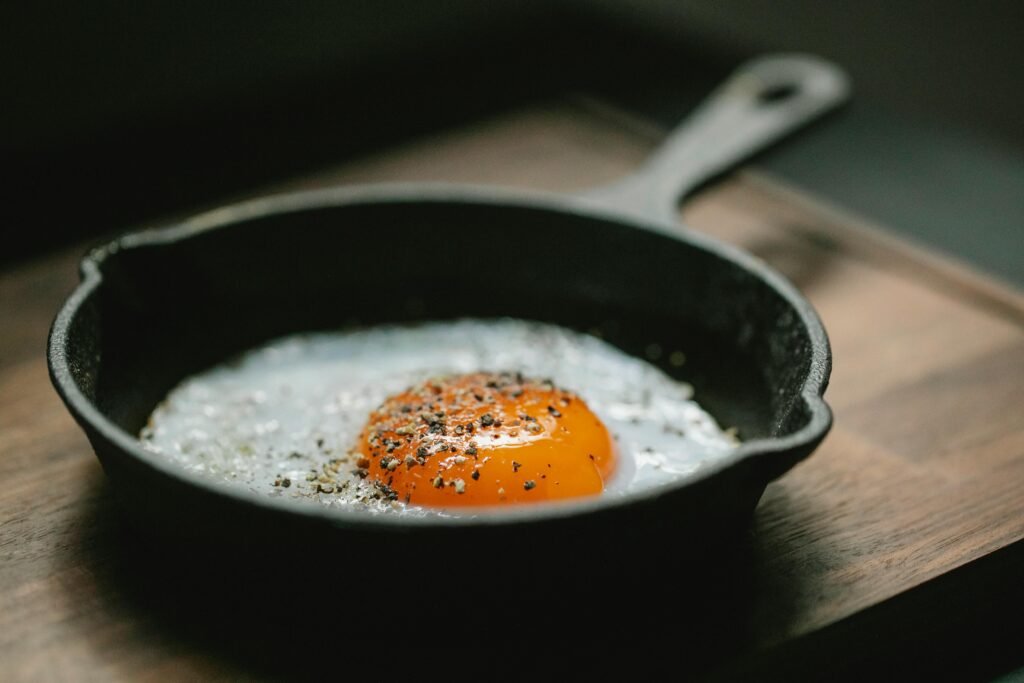
Ever cracked an egg into a cast iron skillet only to find it glued to the pan! That’s a beginner’s mistake and happens to a lot of people. While cast iron is known for its durability and heat retention, frying a perfect egg can feel like a battle, especially for beginners. Don’t worry. This guide will show you exactly how to fry an egg on a cast iron skillet without the frustration of it sticking. No matter what your preference—sunny side up, over easy, or scrambled—we got you covered.
Why Choose a Cast Iron Skillet for Eggs?
Before you choose a cast iron skillet for eggs, know how cast iron helps cooking eggs. The biggest benefit of cast iron is that it distributes heat evenly. Even heat distribution makes it easier to control cooking temperature, ensuring that the eggs are cooked well. They are naturally non-stick if well seasoned. A well-seasoned skillet can rival modern non-stick pans without the toxic coating. And most of all, they are built to last. Treat it right and your cast iron pans could outlive you and last 3 or 4 generations.
Tools and Ingredients You Will Need
- 1–2 eggs. Fresh eggs hold their shape better.
- 1–2 teaspoons of oil, butter, or ghee. Any cooking oil works fine.
- Salt, pepper, herbs to your preference.
- Cast iron skillet, preferably 8–10 inches.
- Spatula. Stainless steel spatulas work best.
Step-by-Step Guide to Frying Eggs in a Cast Iron Skillet
1. Start with a Seasoned Pan
Ensure your skillet is properly seasoned. A shiny dark surface means your pan has a built-up solid layer of polymerised oil that makes it “non-stick”. If you see the surface is rough and not black, or if the surface is not smooth and greasy, it usually means that your skillet needs re-seasoning. Check the article on seasoning your cast iron pans for more details.
2. Preheat the Skillet
Place your pan on a stove and heat it over medium-low for 3–4 minutes. Preheating the pan prevents sticking and ensures even cooking. Do not put the flame on high. Too hot and the eggs will burn out and stick. Medium-low heat creates a steady heat and cooks the egg evenly.
3. Add Oil or Butter
Once the pan is well heated, add 1–2 teaspoons of fat. Swirl it around to coat the entire cooking surface. This matters a lot. Cast iron requires a bit of lubrication even though it is well seasoned. The oil helps fill in the pores in the surface, giving a smooth cooking experience. Don’t be shy with the cooking oil if you think more is needed. Adjust the oil to your taste. Sometimes more is good.
4. Crack the Eggs into a Bowl First
Crack the eggs into a bowl first. This gives you more control over how you pour the eggs into the skillet. If you break the eggs directly onto the skillet, you will not be able to control the flow of the egg. The better option is to pour it into a bowl first.
5. Gently Slide the Egg into the Pan
Gently tilt the bowl and let the egg slide into the skillet. You should hear a soft sizzle. If the pan is too hot, the eggs will sputter, which may not be good.
6. Let It Cook. Do Not Touch
This is probably the toughest part for most cooks, especially beginners. Patience. Let the egg cook undisturbed for 2–3 minutes. Do not touch it. Do not move the skillet. Do not increase the heat. When you see a golden edge and the whites are set, you know that the egg is nearly ready. For sunny side up, you can move it to a plate directly—do not flip. For an over-easy, gently flip and cook for another 30 seconds. For over-hard, cook longer after flipping until the yolk is fully hard.
Use the Right Spatula to Remove
Slide the thin, wide spatula under the egg to lift gently. If the pan has an elevated edge, use a steel pancake flipper or hamburger turner to flip the egg smoothly. Avoid wooden spatulas, especially if you are a beginner.
Season and Serve
Add salt, herbs, and pepper to taste. Serve on toast, rice, or breakfast plate of choice.
Common Mistakes to Avoid
- Not preheating the skillet: Preheat the skillet to ensure that the egg does not stick to the pan. If you do not preheat the skillet, even a well-seasoned pan will stick.
- Using little oil: Ensure that the surface is well coated with oil or the fat of your choice. You need to have a smooth surface for the eggs to bounce on. A 12-inch skillet can usually do well with 2 teaspoons of oil or butter.
- Cooking on high heat: If your preheat is too high, the eggs will burn and not cook evenly. This usually results in burnt bottoms and raw tops for eggs.
- Using a poorly seasoned tawa: If your pan is not well seasoned, you may get by with some extra oil, but it will still stick to the surface a bit. Ensure your pan is well seasoned.
- Moving the eggs too early: The biggest and the most common of all problems is people tend to try to flip the egg too early. The eggs are not firm enough to be flipped even though there seems to be the white which is set. Leave it for a minute and ensure that the bottom of the egg is firm. You can test this by nudging the edges of the egg.
How to Make Your Skillet More Non-Stick Over Time?
Your cast iron pans can be used to cook almost anything, but to make sure that they are well seasoned over time, just cook high-fat food to improve its seasoning naturally. Deep-fried food, making ghee, cooking bacon or meat, frying fish, etc., can add a layer of seasoning to the pan gradually, without you even knowing it. Whenever you wash your pan, dry it immediately and heat it on a stove for a minute to make it really dry and remove all moisture. Apply cooking oil to it before storing it for future use. This prevents the surface from rusting and maintains the seasoning on the surface.
Soap is not usually a problem while washing your cast iron pans, but avoiding it is usually recommended. If you do use soap, ensure that you coat with oil after drying.
If you do find your pan too sticky or not seasoned, season it. We recommend that you season your cast iron pans at least once a year.